
The Prohibition on Tail Docking explains in what situations this procedure it may be allowed, and what time frame it is required to be preformed. Pointers, Spaniels and Terrier puppies may be docked before the age of 8 days old, but only in specific situations and it has to be preformed by a veterinary practitioner. Tail docking is defined as removing the tail or part of the tail of a dog. It is legally required to be performed by a trained professional e.g. a licensed vet (veterinary practitioner or a veterinary nurse) and when it’s foreseen that the puppy will likely work in lawful pest control or the lawful hunting or shooting of animals.
More information can be found at
- http://www.irishstatutebook.ie/eli/2014/si/125/made/en/print S.I. No. 125/2014 – Prohibition on Tail Docking (Dogs) Regulations 2014
from Simon Coveney the then Minister for Agriculture, Food and the Marine.
This declaration from a vet outlines the reasons, and other information about the procedure. Special records of these sales are also required to be retained by the breeder.
Example tail docking attestation
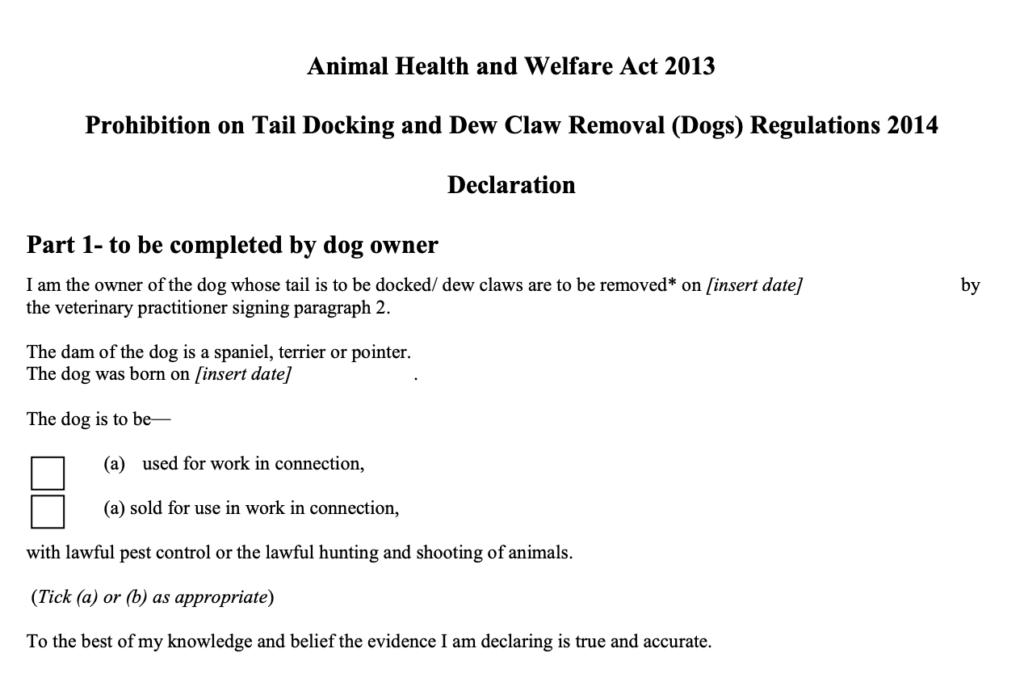
This document should be kept with the dogs’ records for the life of the dog, should you be asked to show proof that the docking was performed legally.
Example attestation form
The certificate as published in March 2014 we do recommend you check check the Department website for the most up to date version.
Example of cropped / docked tail
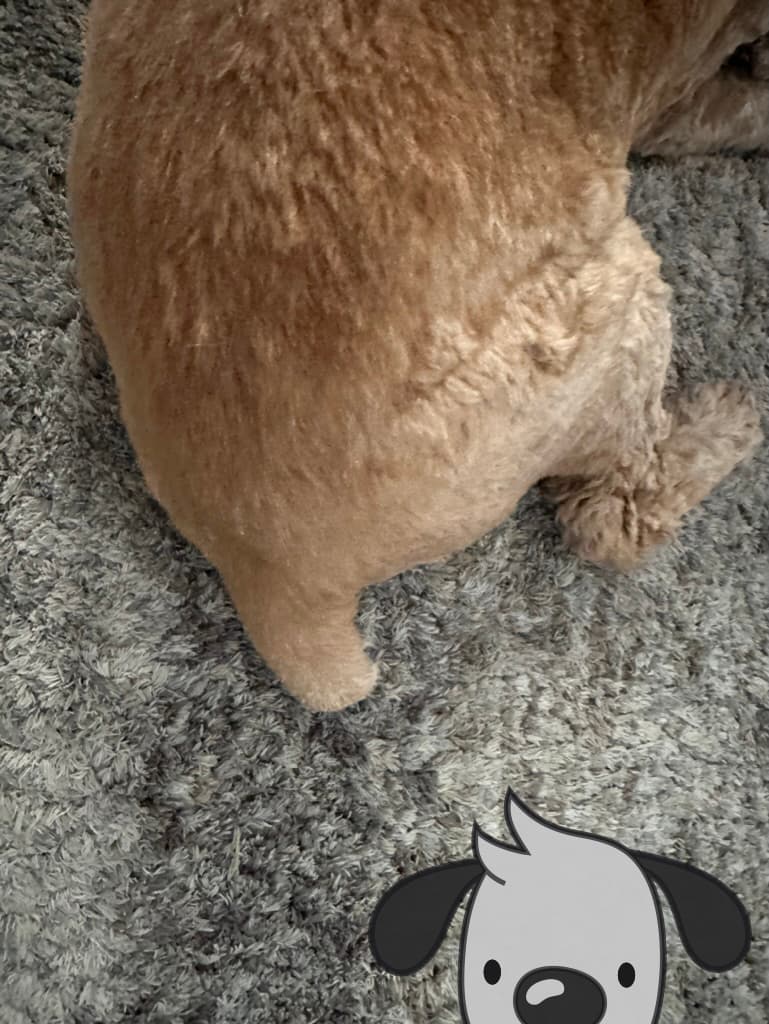
Cropped tails have an abrupt, almost square like end to them, compared with a natural taper.
Breeds that can be legally have their tails docked
Generally the tail is docked to prevent it from getting in the way or getting injured while the dog is working. Only certain breeds can legally have their tail docked, these are:
- Pointers
- Spaniels
- Terrier
All other breeds such as boxers, dobermans and bull breeds are not included on this list, and performing this is illegal, unless it’s medical required.
Why was a tail docked?
There are a few reasons why you may see a dog with a docked tail on the streets, some of these include:
- Tail was docked because of breed and work area and performed under Prohibition on Tail Docking (Dogs) Regulations 2014.
- Tail was docked outside of Ireland, where it’s legal to perform the procedure on dogs.
- Tail was damaged and needed to be surgically removed by a vet.
If you are buying a dog with a docked tail it’s important to ensure that it was done legally, and you have the evidence to prove it. It is not allowed to remove a tail for purely aesthetic reasons.
Tail Docking Northern Ireland
In Northern Ireland, tail docking, the removal of part or all of a dog’s tail, is generally illegal under animal welfare law. It is also an offence to take a dog to another jurisdiction to have the procedure carried out. Convictions for illegal docking can lead to serious penalties, including imprisonment and fines. The law also restricts showing docked dogs at events where there is a fee, with only limited allowances for dogs docked before 2013 or those demonstrating working ability.
However, there are strict and limited exceptions. Tail docking is permitted if carried out by a veterinary surgeon for necessary medical treatment, or in emergencies to save a dog’s life where a vet is not available. There is also a specific exemption for certain types of working dogs, such as spaniels, terriers, and breeds used for hunting, pointing, or retrieving, but only where there is credible evidence the puppy will be used for lawful activities like pest control, law enforcement, or shooting. Even then, the procedure must be carried out when the puppy is no more than five days old and under veterinary supervision.
A key part of the legal framework is the requirement for a formal certification process. At the time of docking, both the breeder and the veterinary surgeon must complete a tail docking certificate, confirming that the legal conditions have been met and that appropriate evidence has been provided. The puppy and its mother must be presented to the vet, and the dog must later be microchipped, with details recorded against the certificate. This documentation is essential proof that the procedure was carried out lawfully and must be retained as part of the dog’s records.
See certification for docked tails here : https://www.nidirect.gov.uk/publications/tail-docking-certificate
Further reading
- Legalities of ear cropping of dogs
- Dew claw removal
- Guidance on Tail Docking of Working Terriers (external) by Irish Working Terrier Federation
Leave a Reply