
“What breeds of dogs are banned in Ireland ?” is a support question that comes up quite often. With reports of increased frequency of dog attacks, biting incidents and even fatal cases, it’s something on the minds of people about dangerous dogs, should they be muzzled and what breeds are on this list. This article is not about how effective these banned breedings lists are, the Federation of Veterinarians of Europe has a report that may shed some light into this topic here.
There are certain extra rules that owners of dogs that are on the restricted list need to adhered to that we’ve listed here.
Banned Breeds (New July 2024)
From October 1st 2024, the XL Bully is the first dog that is on the Banned Breeds List (BBL). After this date you are not allowed to sell, breed, re-home these dogs. From February 1st 2025 all owners of these dogs need to show proof that their dog is neutered, microchipped and has a license and need to apply for a Certificate of Exemption.
Questions about ban can be sent to [email protected]
Because of this new ban Dogs.ie will cease accepting ads for XL-Bullys on September 30th 2024.
XL Bully Definition
The definition is similar to that in the UK and Northern Ireland. Please see the official Physical Conformation Standard document:
Large dog with a muscular body and blocky head, suggesting great strength and power for its size. Powerfully built individual.
• Adult male from 51 cm (20 inches) at the withers.
• Adult female from 48 cm (19 inches) at the withers.
A dog’s withers are the highest point of their body between their shoulder blades and the base of their neck, and is the standard place to measure a dog’s height. The full information can be found at gov.ie/xlbully/.
Rules for restricted breeds in Ireland
This law is the The Control of Dogs Regulations 1998 (S.I. No. 442 of 1998). The rules state (but we encourage all dog owners to read the statue themselves):
- These dogs listed need to be muzzled in public.
- These dogs listed must be on a short, less than 2 meters (6.5 feet), lead. The leash must be ‘sufficiently strong’ or it needs to be a chain.
- Dogs must wear a collar at all times with the owners information on it. This information should include owners name & address.
- These dogs can only be led by people over the age of 16.
- Certain exemptions exists. See the exemptions list below.
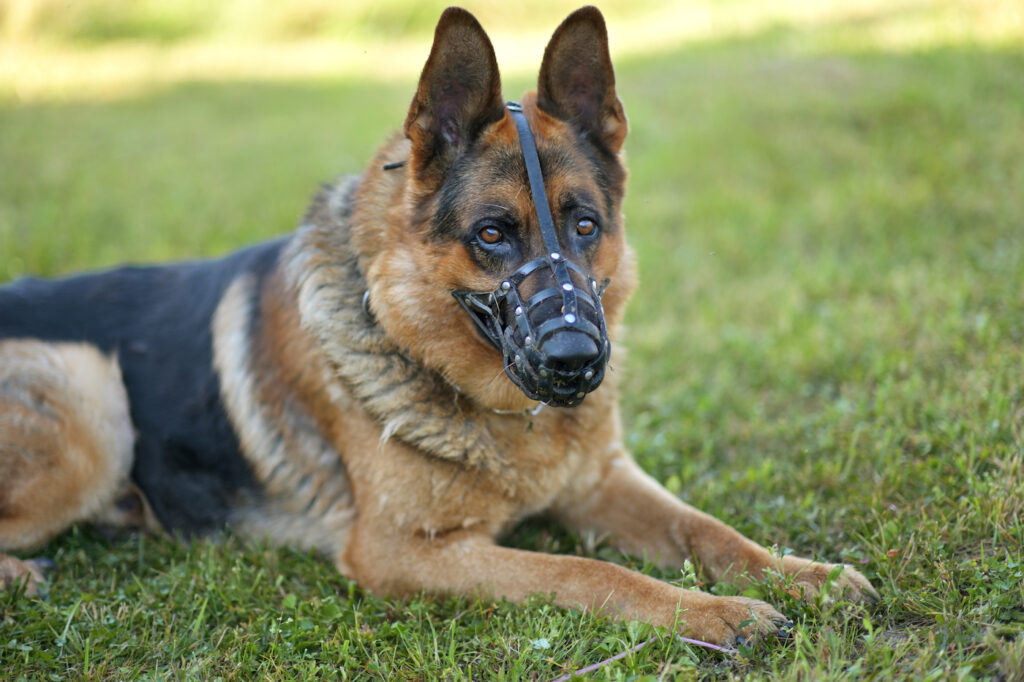
Restricted dog breeds in Ireland
- American Pit Bull Terrier
- English Bull Terrier
- Staffordshire Bull Terrier
- Bull Mastiff
- Dobermann Pinscher
- Rottweiler
- German Shepherd (Alsatian)
- Rhodesian Ridgeback
- Japanese Akita
- Japanese Tosa
- Ban dog – a so called “ban-dog” is a cross or mixture of any of the above breeds mentioned or any strain of the above dogs listed.
Breeds under consideration of being restricted
As of December 2022 the Presa Canario breed is now under consideration be being added to this list.
Banned Breeds in Northern Ireland
Northern Ireland has different rules, and these are actually banned, as opposed to in the Republic of Ireland being restricted. There are four breeds of dogs that are banned in Northern Ireland:
- Pit Bull terrier
- Japanese Tosa, which is known in Japan as being bred a fighting dog. It is quite a rare breed.
- Dogo Argentino
- Fila Brasileiro, or Brazilian Mastiff
- XL Bully
There are different rules about keeping a banned dog in Northern Ireland, these include
- The dog has to be neutered
- You have to hold an insurance policy for the dog
- Dog has to be leashed and muzzled when in public.
- When not in public it has to be housed in a secure location
- Dog is available to the council’s dog warden to be inspected
- You have to inform the council if you move or the dog dies
Source : https://www.nidirect.gov.uk/articles/banned-breeds-dogs-northern-ireland
Are Pitbulls banned / restricted?
Often we get asked about Pitbull breeds, and if they are banned / restricted. The confusion comes from the fact that Pitbulls are not one particular breed, but generally refer to one of the following 5 breeds, we have marked it below if they are on the official restricted list.
| ID | Breed | Restricted |
| 1 | American Bully / Pocket Bully | Yes |
| 2 | American Pit Bull Terrier | Yes |
| 3 | American Staffordshire Terrier | Yes |
| 4 | Staffordshire Bull Terrier | Yes |
| 5 | American Bulldog | No |
Are American Bullys / Pocket Bullys banned / restricted?
A Pocket Bully or American Bully is a hybrid dog that is bred from an American Pit Bull Terrier and a Patterdale Terrier. As the American Pit Bull Terrier is on the restricted dogs list, and a Pocket Bully is a mix of this breed, it in turn, it would be classed as a “Ban Dog” and would be in-turn on the restricted list. They come in a number of sizes, (from smallest to largest, with typical ranges)
- Pocket Bully – Males: 35-43 cm, Females: 33-40.5 cm
- Classic Bully – Males: 43-51 cm, Females: 40.5-48 cm
- Standard Bully – Males: 43-51 cm, Females: 40.5-48 cm
- XL Bully – Males: 51-58.5 cm, Females: 48-56 cm
- Extreme Bully – Varies, typically similar in height to the Standard or XL but with exaggerated features
Other banned dogs
Around the country, local housing authorities or private apartments buildings may ban or limit certain dogs being kept. Some apartments limit dogs based on weight, or number of dogs per property. Similar rules and guidelines may exist for breeding dogs in council housing or other properties. Before getting a dog, double check your lease agreement to make sure your landlord allows one, it can save a lot of hassle and heartache down the road.
In 2007 Dublin City council banned the following breeds:
- American Pit Bull Terrier
- Bull Mastiff
- Doberman Pinscher
- English Bull Terrier
- German Shepherd (Alsatian)
- Japanese Akita
- Japanese Tosa
- Rhodesian Ridgeback
- Rottweiler
- Staffordshire Bull Terrier
Source https://councilmeetings.dublincity.ie/mgConvert2PDF.aspx?ID=23736 These dogs are not allowed to be kept on the property or even enter the housing estate.
Similar breeds like American Akitas, while are not on the list, are also likely to be restricted. American Akitas are larger than their Japanese counterparts, and hence are likely to fall into the category. Some breeds have similar names, like the Japanese Akita can also be called an Akita Inu and would most likely still fall in the restricted category. When in doubt you can ask at your local Garda station about your breed or your vet for guidance.
Exceptions & exemptions to this act
Some exceptions exist to The Control of Dogs Regulations, and are outlined in the law. Most of these exceptions pertain to law enforcement, border protection or other essential services. The exceptions to these rules include:
- Dogs kept by Garda Síochana / the Defence Forces,
- Dogs kept by the Dublin Port / Docks Board Harbour Police / any Airport
- Police / Fire Service at a State Airport.
- Dogs kept by the Central Fisheries Board or a Regional Fisheries Board,
- Dogs kept by the Customs and Excise service of the Revenue Commissioners,
- Dogs properly used in the search and rescue of a missing person.
Controversial bans
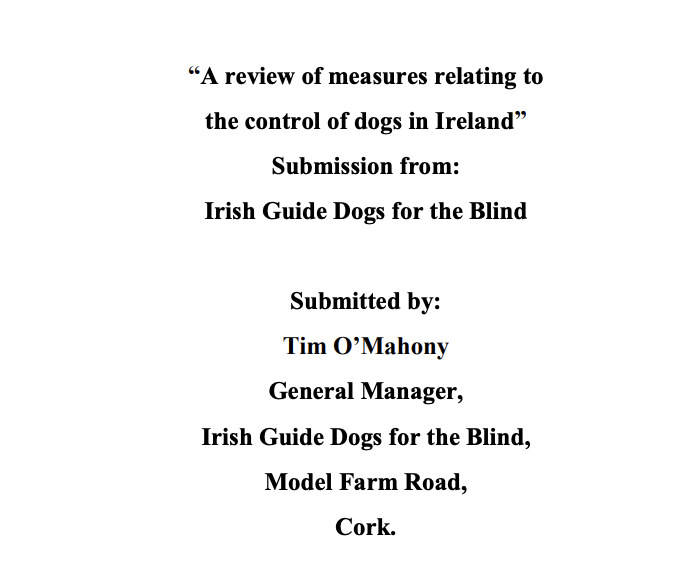
One exception that we feel is missing is to cover Guide Dogs, GSD or German Shepherd dogs are often trained to be guide dogs for giving assistance to blind and visually impaired people. In 2019 Irish Guide Dogs for the Blind submitted their request for consideration of this fact [source]. To date this issue has not been addressed formally.
Banned Breeds in England, Wales & Scotland
Pitbull Terriers were banned in the England under the Dangerous Dogs Act 1991. The act was introduced in response to a spate of incidents involving aggressive dogs, with the aim of ensuring public safety. Alongside Pitbull Terriers, the act specifically prohibits the ownership of three other breeds:
- the Japanese Tosa,
- Dogo Argentino,
- Fila Brasileiro.
The legislation makes it illegal to own, sell, breed, give away, or abandon dogs of these breeds without specific exemption from a court. The act also includes measures that apply to any dog that behaves in a manner deemed dangerously out of control. Owners of such dogs can face legal action, with penalties including fines, destruction orders for the dog, and potentially imprisonment.
XL Bullies in England & Wales
In 2023 there was a marked increased in attacks (including some fatal) from XL Bully Dogs and on 31/10/2023 the UK Government created an official definition of what the breed is defined as [source]. The definition of an XL Bully Dog does not mention specific breeds, but rather certain physical attributes like height, head, teeth but not weight. From December 31, 2023, any activities involving the breeding, selling, advertising, rehoming, abandoning, or uncontrolled roaming of XL Bully dogs will be prohibited. After this date, American Bully XL dogs must be securely leashed and muzzled any time they are in public spaces. Subsequently, as of February 1, 2024, possessing an American Bully XL dog that is not listed on the Index of Exempted Dogs will become an illegal act.
XL Bullies in Northern Ireland
From 5 July 2024 it will be illegal to sell / gift / breed from an XL Bully. All XL Bullies will need to be
- Muzzled in public
- On a short lead
- Kept in a secure location
From 31 December 2024 it will be an offence to own an XL Bully that’s not on the exemption list. Source NIDirect.gov.uk .
In Scotland the dates are from 23 February 2024 and 31 July 2024 respectively for selling and registering XL Bullies. Source gov.scot


Leave a Reply